

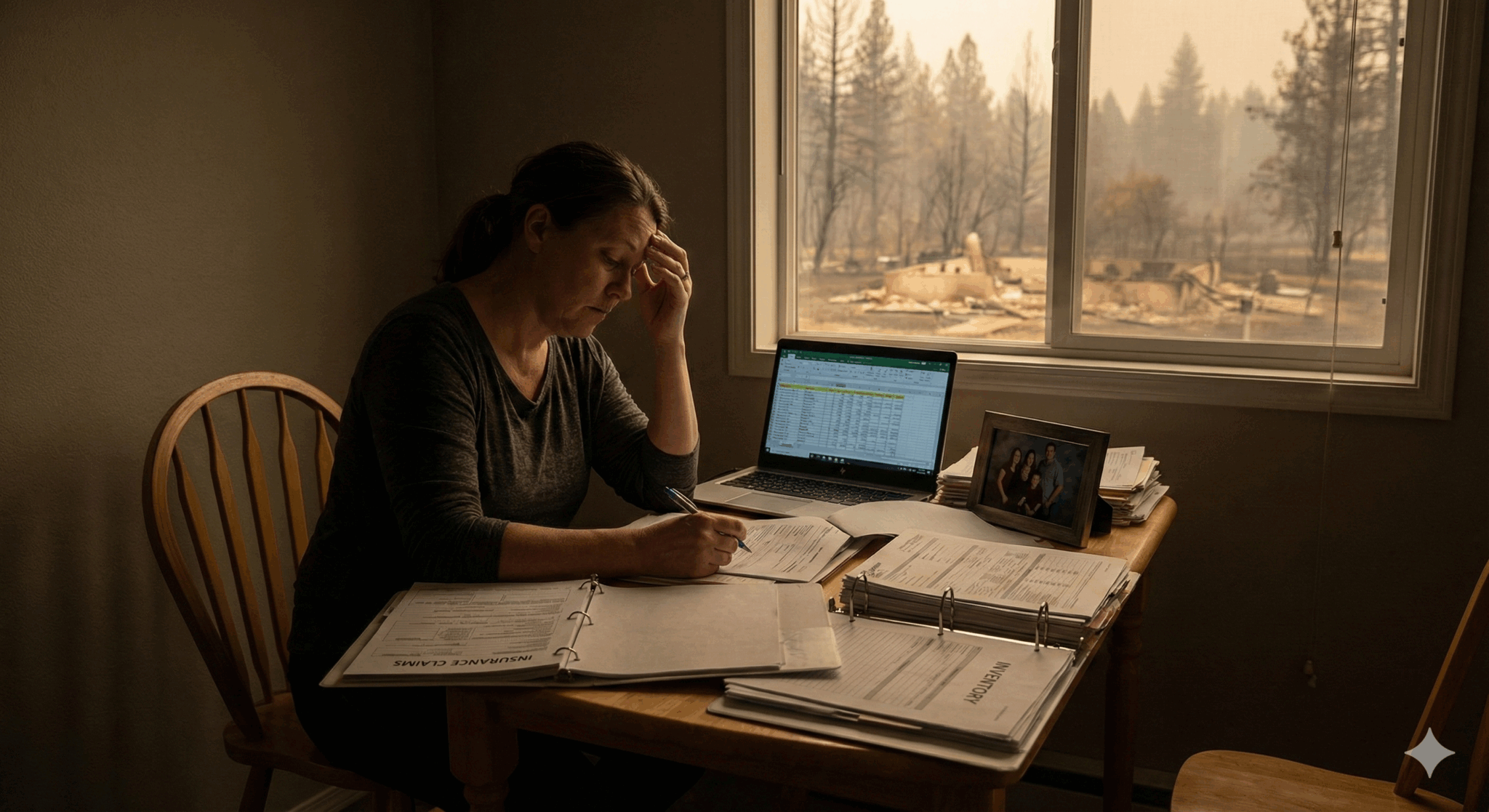
Tuesday smelled like a melted plastic spatula.
In the middle of her living room, Clara paused. At each front window, she tested the lock – twist and tug. Her palm slid along the seal of the front door, feeling for gaps. Into the kitchen she went, stopping beneath the stove vent to breathe in slow. The faintest hint of gas made her hold still. Outside, wind rattled nothing because every gap had been shut tight. Still, smoke crept where walls met plaster, a bitter trace of wood turned to ash. Smoke found its way up despite thick layers meant to block sea air.
The time showed 2:14 when she glanced at her wristwatch. Outside, the sky held no clouds – just a pale, lifeless stretch of white. That dull glow seemed as if a grimy eraser had smeared right over the sunlight.
Fog clung to everything, each dawn a repeat of the last. Three miles inland they stayed, far from any saltwater edge. Mornings always wet, air thick without warning. Fire belonged elsewhere – dry ravines, distant hills, never these tidy yards with their perfect hedges. What burned now was not supposed to catch here.
That was when her phone shook on the quartz counter. Loud. Unstoppable noise like a siren. Right after, David’s device answered from down the hall. The tablet joined next, perched on the living room table. All of them singing at once.
Phone in hand, Clara lifted it slowly. The screen lit her face without a sound.
Fire danger high. Get ready to leave soon.
Eyes locked on the screen. Words wouldn’t stick, just bounced off her thoughts. Another look – same message. Denial kicked in fast, like slamming a door. That alert? Had to be broken. Some mix-up from county systems, nothing real.
Into the kitchen came David. Not calm, not brave – his face held no color at all. A flicker ran through his jaw, jerking without stop. From him came only: “The Hendersons are packing their Subaru.” Words with no rise, no fall, just empty air.
“It’s a mistake,” Clara said. She pointed toward the window. “We are literally next to the water. The air is damp. Trees don’t just spontaneously combust here.”
“Clara.”
“I’m not packing up the kids because of a glitch.”
Into the doorway stepped David, turning the knob slow. A wave crashed through the air – sharp, stinging. Not only wood now. Melted tires joined in, roads baked raw, colors boiled into smoke. A heavy slab of dull ash drifted down toward the porch. This one settled right on top of the entry rug.
“We need to go,” David said. “Right now.”
Most folks imagine themselves staying sharp when crisis hits. Films trick you into believing you’ll snatch the emergency kit, lock down the area, then slip away without error. But real fear? It wipes out clear thought.
Ten minutes, give or take. Into the hallway closet darted Clara, yanking out an old blue Jansport sack. Her room came next. How does one pack a lifetime in under quarter of an hour? Jewelry stayed behind without a glance. A pile of fresh sweatpants got snatched first. Under the bed, the fireproof box waited – she sprinted toward it. Passports slipped inside the sack, along with the children’s papers. The kitchen came next, fast footsteps on tile. From the cluttered drawer yanked a messy knot of charging wires, leaving the plug adapters behind by accident.
Office air stilled when David jerked the cord loose. Out went the plug, then down came the monitor – glass splitting on impact. Curses spilled sharp and fast from his lips. The broken machine left behind, he snatched up the compact hard drive without looking back.
Into the hallway he stepped, then froze. All around, shelves brimmed – books stacked deep, trinkets gathered over years, photos held tight behind glass. One image caught his hand. His fingers slipped the hook free. A snapshot: the four of them daubing paint on the front porch when they first arrived. Under his arm it went.
Clara’s voice cut through the air. “The children.”.
Out of sleep came Sophie and Leo, blinking slow. Their heads heavy, complaints tumbling out, unsure why Mom and Dad moved so fast. Into thick coats they went – Clara forcing sleeves over sleepy hands – even while heat shimmered beyond the glass.
Down the road, things had spun wild. Tires growled under sudden bursts of speed. Metal clanged as frames met pavement hard. From a house past two others lived a man who once counted money for firms now gone – each weekend he’d trim grass like clockwork – yet here he sprinted without seeing, bare feet slapping asphalt. Clutched to his ribs: a clear box meant for pets. His breath came fast, broken, uneven.
Shaking started at Clara’s fingers, moved up her arms while she strapped the children inside the car. Leo’s seat clip refused to lock, his small body waiting behind the fogged window. A sharp tap with the edge of her palm finally closed the latch – sound cracked like a dry twig. The moment held still after that.
Outside the car, she paused, eyes moving to the house. Blue panels covered its walls, a little faded now. That lopsided porch light still tilted like it always did. Her gaze dropped to the garden beds – three whole weekends lost to spreading mulch. This place seemed solid, unshakable. Built of timber, fastened with metal, held in place by heavy slabs below. Disappearing wasn’t something it could do.
Honk went David’s horn. Inside climbed Clara, after that the car rolled forward.
Out of the subdivision, traffic crept forward, barely moving. Red taillights stretched ahead, a snaking line through the haze. Now ash dropped without pause, piling on glass fronts like dirty frost. Light faded early because of the smoke – thick enough to make day feel like dusk.
Even as flames crept closer, something calm settled among the drivers. No one scrambled or shouted for room. At intersections, they took turns without argument. When David approached, a driver in a large SUV motioned him ahead, letting him go first. A flash of hazard lights came from the delivery van after another driver made space. Because everything was falling apart at once, they chose courtesy anyway.
Sophie cleared her throat from behind. Mom?
“Yeah, baby.”
“Are we coming back home tonight?”
Through the rearview glass, Clara watched Sophie hold tight to a plush stingray. Not far inside, she fought the urge to say things that weren’t true. Comfort hovered just out of reach – glowing stars on a bedroom ceiling, sleep in familiar sheets – the kind only home gives.
“I don’t know, Soph.”
Heat pressed against the windows like a weight. The Honda ahead filled David’s eyes, its rear edge sharp under the sun. Fingers locked tight around the wheel, drained of color. Air stilled inside when he killed the AC – smoke could creep in otherwise. Silence sat heavy, unbroken by words or sound.
Fourteen miles stretched out like a day’s work, dragging their trip into a two-hour crawl.
Out near the edge of a neighboring town, they came to a stop in a high school lot. Blue hung above, but far off, a dark line pressed forward like it meant trouble. Inside, the gym smelled of rubber mats and urgency – turned now into a place for sorting injuries.
A sour mix of old sweat, sharp cleaning fluid, and fear hung in the air. Tables began to appear as tired helpers in bright vests pulled them open. Bottled water rose in crates beside the rusted hoops. Bleachers held hundreds who had nowhere else to go, each gripping trash bags stuffed with clothing, eyes fixed on silent screens.
A form appeared in front of Clara, held by a young person whose skin showed signs of breakouts. Please list your name first, then how old you are, came the request. They also asked if there had ever been any health issues worth noting
After scribbling on the paper, Clara listed four names. Ages followed – four of them. Not one allergy marked. Then she passed the sheet back.
A hand landed on Clara’s shoulder, weathered fingers gripping just above the elbow. The voice came low, edged with static from the device clutched in the woman’s palm. Shelter – had she found one yet? Not a nameless place, but something real: walls, lights, people who knew her face
Clara moved her head from side to side. Getting beyond the driveway hadn’t crossed her mind. Not a chance
Overhead lights hummed faintly as bodies settled onto the gym’s wooden surface, covered in rough wool handed down by strangers. Kids gave in to tired minds, one by one, their breathing slowing into uneven rhythms. Clara stayed upright, eyes open. David beside her, silent. Darkness wrapped around them while they sat facing nothing, legs folded beneath. Sleep never came near.
Her eyes fixed on the screen. Every half minute, a new pull down on Twitter. Through neighborhood posts she moved slowly. Hunting for hints left lying around. Fuzzy images from space showing warm spots. Words lifted from emergency radio chatter. Stories whispered by those saying they never left town.
Midnight had passed when the glow came. It was a message, sent by someone next door who left their home just hours before.
Sorry about that. Driving by when leaving, saw it myself. Every house on the block – completely wiped out.
Silence came instead of tears. The phone went black under her thumb. Down it went, flat against the tiles. In the dim room, breath after breath rose from the crowd inside that hall.
Light spread across the sky while officials stayed silent. Firefighters worked the edges of the blaze even though gear and help ran short. Tracking burned homes wasn’t possible under those conditions. Still, online spaces filled in where silence left off.
A little past twelve, a clip showed up online – posted by an unknown person. Up above, the camera glided over rooftops on its own path. The view came from way higher than anyone would normally see. Houses lined up below like pieces set out overnight.
Huddled around the phone, Clara stared at the image. David said nothing as the video played. Instead of homes, only a precise pattern of white ash filled the space. Dark gray lines cut through it – what remained of roads once used every day. Down there, squares held chunks of old concrete. Milk used to come from a shop at the edge – now it’s missing. Trees once lined paths where nothing grows today.
The walls seemed to sway around Clara. Not sorrow – sorrow needs awareness of what’s gone. Instead, a deep dizziness took hold. The screen’s image made her mind rebel. A single flat white square made of ash holds no space for thirty six years of keeping things. Furniture weighing thousands of pounds, along with every remembered moment, refuses to squeeze inside. Numbers fall apart when emotion does the measuring.
A short time after, the county let people look at their property for just a moment. Smoke hung heavy in the breeze. Without waiting for anyone, David walked there by himself. A helper lent him a stiff paper face cover plus something bright on his head.
Inside the tight space of a roadside motel, Clara sat beside the children. Not one word came through the TV screen – just shapes moving in silence. A car passed outside, its headlights slicing across the ceiling for a moment. The youngest leaned against her shoulder, breathing slow and even. Time stretched without sound except for the hum of the air conditioner kicking on again.
Three hours passed before David came back. Into the motel room he stepped, slow and quiet. Thick gray gunk coated his boots from sole to lace. Off came the mask, pulled down without a word. Empty was how his face looked – no trace of feeling showing.
Up she rose, moving off the bed’s edge.
Into the bathroom he went after glancing her way, a single slow shake of his head before closing the door. Water started rushing down as soon as the tap opened, filling the space with steam. For sixty minutes straight, that stream never stopped pouring. Only silence came from inside while the room filled up with mist.
Nothing remained. Winter coats vanished. Paperbacks turned to nothing. That one kitchen drawer – gone too, where sharp scissors slept beside old batteries. School drawings made by small hands, disappeared. Even the couch bought after counting coins for weeks. All crushed without pity into gray dust.
Later that day, Clara picked up the phone and dialed her insurer. She started the conversation without waiting long.
What she pictured? Heavy words, silence between sentences, perhaps being handed off to someone trained for crises. What actually happened? A voice just asked routine questions, calm as morning radio. The shock came not from noise but how ordinary it sounded. Like arguing about an incorrect invoice while making coffee.
“State Farm claims, this is Kevin.”
Polite, Kevin spoke with the ease of someone who’d done this before. A hint of scripted concern slipped into his voice as he pulled up the file. Out came a dozen numbers – neat, official, ready for records. Then came the detail: an adjuster on site soon, name to follow.
“In the meantime,” Kevin said cheerfully, “you can get a head start on the personal property inventory. I’ll email you the spreadsheet.”
What’s in the stock? Clara said.
“Yes ma’am. We need a list of everything inside the home. Room by room. Try to be as specific as possible regarding brands, ages, and replacement costs. It really helps speed up the depreciation calculations.”
The laptop lid lifted over the cramped motel workspace. From her inbox, one message caught a finger tap. Up popped an enormous grid – totally empty except for pale gray lines.
What you’re looking at – details about each item. The name of the maker shows up next. How old it is appears here too. What it would cost to replace lands in this spot.
The screen flickered, a tiny light pulsing like a heartbeat. Starting out, it felt straightforward enough. After all, you recognize the things around you. Day after day, those objects surround you without question.
She typed:
Living room couch.
55-inch TV.
Three beds.
Dresser.
Clothes.
Kitchen stuff.
A pause came over her. Six lines of words stared back. Totally ridiculous, it seemed. As if some off-world visitor made it – someone who’d never once lived where people eat, sleep, cry.
Faster than expected came the reply, once she handed over the first version of the list to the adjuster midweek – sharp, unkind, without pause.
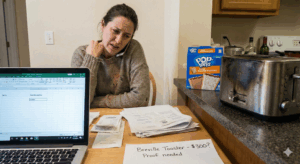
“We can’t accept this, Clara,” the adjuster said over the phone. “If you just write ‘toaster’, I am legally obligated to price out the absolute cheapest toaster available at Walmart. If you had a $300 Breville toaster, you need to state that, and ideally provide proof.”
“Proof?” Clara said. Her voice cracked. “My house is a pile of ash.”
“Photographs work. Credit card statements. Amazon order histories. You need to list everything.”
Everything.
The call ended. Her eyes met David’s. Everything – that is what he demanded. Socks, one by one. Even the kitchen tools
That’s when things shifted into worse territory. Within twenty-four hours, flames died down. Counting every broken item turned into a slow daily grind they could not escape.
Later on, once the children were finally quiet upstairs, they took their usual spot by the motel counter. Light from the screen painted shadows across their skin, pale and worn. One item at a time, memory by memory, they rebuilt what fire erased – slowly tracing walls that no longer stood.
Right then,” David muttered, wiping his face. Off to the kitchen now. Check the utensil drawer first
“Spatula,” Clara typed. “What kind?”
“I don’t know. The red one.”
“Silicone. Was it OXO brand? Target?”
“Put OXO. Twelve bucks.”
“What else was in the drawer?”
“The pizza cutter. The ice cream scoop. The good scissors.”
“What brand were the scissors?”
David slammed his hand against the desk. “I don’t know the brand of the damn scissors, Clara! They were metal and they cut things!”
Fire wasn’t the problem. What mattered was counting things. Towels became a battle every third night. One insisted there were seven – another swore it was six. The vacuum brand came up each time someone cleaned. Guest bathroom shelves sparked debates too. Shampoo bottles, partly empty, caused more noise than smoke ever did.
One by one, they turned into investigators of their broken pasts. Inside their palms, screens lit up with old images stacked like layers of time. Smiles of kids up front hardly caught their eyes at all. The joy once tied to those moments had faded completely. What held them now was just the unclear space behind each person.
“Look at this one,” Clara said, zooming in on a picture from Leo’s third birthday. “Behind the cake. On the counter. Is that the blender?”
“Yeah. Ninja brand.”
“Write it down.”
That snapshot of laughter by the fireplace? It got picked apart, turned into bits. Not warmth anymore – just evidence pointing at a plastic tree bought online, shiny baubles hanging from its branches, three wool socks stitched with names. The beach shot in Maui didn’t capture sunshine or salt air – it served one purpose: showing matching luggage tags clipped to rigid suitcases made by a brand people recognize.
That Sunday stretched on forever while Clara sifted through old Gmail messages – seven years’ worth. One by one, the stores came up: Wayfair first, then Amazon, then Target after that. A single slip from 2019 stood out – a coffee table listed as mid-century modern. The moment she spotted it, she pulled the title straight into cell 842 of her sheet.
Frozen on the screen, David clicked through statement after statement – three full days lost inside his bank’s website. Hundreds of PDFs piled up, each one holding tiny print that meant nothing until it did. A charge labeled HOMEGOODS + GAS showed up again. Four years back. Forty-five bucks gone. Was it the bath mat he barely remembers buying? Or some small lamp they passed by once in a store? Dates blurred. Receipts vanished. The numbers stayed.
Rows kept piling up. A thousand tall now. Then two. The sheet stretched without saying a word.
Last time I checked, Row 2145 had a box of Q-tips – only half filled, though. Five hundred sticks inside, marked down to four dollars flat.
Twenty-one forty-six on the list: ibuprofen without a brand name, two hundred milligram strength. Priced at six dollars.
Row 2147: Harry Potter paperback box set. $45.00.
On sale now – winter footwear by Columbia, number eight in line. Price sits at one hundred twenty dollars flat. Built tough for cold months ahead.
One wall at a time, they rebuilt everything inside a glowing rectangle. Each object placed there felt heavier than before – ghosts in pixel form, unreachable forever.
One month went by. Rent at the motel climbed high. A cramped house was located – far across the county, way beyond budget. Life out there shifted without them. Reports stopped mentioning the blaze. Classes resumed like nothing happened.
Into the classroom walked Sophie and Leo, slinging secondhand packs over their shoulders. Watching from nearby, Clara noticed how the staff glanced at them – soft eyes, quiet judgment hanging in the air. A rhythm began forming: meals on the stove, pages turned together after dark. Still, some weight stayed present – an unspoken worry ticking beneath everything else. That browser window never closed, just lingered, half-hidden behind daily tasks. Off they’d go toward the market when David blurted, “Wait – we didn’t write down the weed whacker in the garage.” Then Clara reached for her phone, slipping it onto the list without slowing down. The car kept moving.
Reality showed up right after. Gone was the home, yet the loan stayed put. Each month, the bank wanted money – payment for nothing but scorched ground.
A call came through from David to the lender. Though it was just routine, the agent suggested pausing payments for ninety days.
“But the interest still accrues,” the rep noted gently.
Frost crept through its circuits instead of malice. Simply machines ran it, emotionless. Because nature had wiped out what they owed, still – no difference made. Numbers stayed numbers, unshaken.
Only bits of the insurance cash showed up at first – no celebration, just confusion. Deposits landed without warning, scattered across accounts. One payment tagged “Loss of Use.” Another, a small sum, marked for belongings, already slashed by depreciation rules. The amount covered mattresses, coats good for cold months. Yet that total felt absurd when measured against full reconstruction needs.
One call went out, then another. Builders across the region? All full up – three years deep in work already. That blaze didn’t stop at one home – it wiped out nearly four hundred. Wood costs jumped overnight. County folks handling permits quit picking up – they were buried under stacks of paperwork. Phones rang until they didn’t.
When winter came, pouring down rain that swept leftover ash into gutters, Clara had already changed deep inside. Heavy storms washed away what remained, yet she stood unchanged by the mess – transformed long before. The season shifted, water dragging grime through streets, but her shift happened earlier, quiet, without warning. Rain fell hard, carrying filth underground, while something in her stayed dry, altered beneath the surface.
Disaster came with paperwork, she realized. Each office – federal, nonprofit, insurer – lived online in separate corners of the web. One needed a password here, another demanded answers by midnight on Tuesday. A single unread message, vague as fog, might vanish your claim overnight.
That big plastic folder went wherever she did. Grocery aisles saw it slung under her arm. So did waiting rooms at the clinic. Even stood beside her in the quiet lineup outside classrooms. Paper stacks lived inside – bank records, policy sheets, accident forms, number grids on printer paper. Guarding it came natural, like baring teeth when someone stepped too close.
That day, she stayed inside the parked car while time passed slowly. The folder – just a plain plastic kind – sat where someone else might have placed their bag. Outside, oaks stood tall, untouched by fire, doing what trees do near schools. Waiting ended when the bell finally sounded.
Finding herself stuck in old memories was something she finally noticed. Rewinding time felt like the only fix, a thought that kept coming back.
Monday might seem like a chance to fix things, yet she would not rethink her suitcase. Not one moment spent shouting at neighbors about what came next. Researching sturdier safes? That effort feels pointless now. Stockpiling extra gear – no, that too slips her mind.
Out comes the phone, like always. Recording begins with a tap. Through each room she moves, slow and steady. Closets swing wide, one after another. Drawers yank open, spilling clutter into view. Shelves appear – books lined up tight. Hangers sway as clothes shift in the light. The camera catches everything, even screws scattered near wrenches.
Maybe she kept records of her days, simply because spending years convincing some company she was real felt worse than writing it all down.
Download ReEmber: https://play.google.com/store/apps/details?id=com.reember.emberise https://apps.apple.com/fi/app/reember/id6749482471
Join Us: https://reember.app/partners/